You bought your acreage because you wanted privacy and a piece of the Texas Hill Country to call your own. Now comes the part where most landowners get overwhelmed: turning raw dirt into a home that stands for a century without cracking or leaking.
Understanding Guadalupe County Soil and Foundation Needs
The biggest mistake I see people make when looking for home builders on your land in Seguin TX is ignoring what is happening beneath the surface. In our part of Texas, we deal with expansive clay soils. This soil acts like a sponge; it swells when it rains and shrinks during our brutal August droughts. If you put a standard slab on this ground without proper engineering, your foundation will move, and your drywall will crack within three years.
A quality build starts with a geotechnical report. I do not guess what is under the dirt. We bring in an engineer to core the soil and tell us exactly how it behaves. Depending on those results, we decide between a post-tension slab or a pier-and-beam foundation. Post-tension slabs use steel cables tightened to a specific tension to hold the concrete together against the pressure of the clay.
If your land is closer to the river bottoms where the soil is softer, the approach changes. We look at drainage patterns first. Water is the enemy of any foundation. Before we pour a single yard of concrete, we ensure the grade slopes away from the future home site to prevent pooling and hydrostatic pressure against the slab.
Managing Well and Septic Infrastructure
When you build in a developed neighborhood, you plug into city water and sewer. On your own land, you are the utility company. This is where many projects stall because the owner didn't account for the "invisible" costs of infrastructure.
First is the septic system. You cannot simply dig a hole and hope for the best. We start with a percolation test (perc test) to see how quickly the soil absorbs water. In Seguin and the surrounding Hill Country, we often deal with rocky terrain or heavy clay that requires an aerobic system rather than a traditional septic tank. Aerobic systems use a blower to inject oxygen into the waste, breaking it down faster and protecting the local groundwater.
Then there is the water. Drilling a well is a gamble until the bit hits water. We coordinate with local drillers who know the aquifers in Guadalupe County. The depth of your well determines your pump requirements and your water pressure throughout the house. I always advise clients to think about their water filtration early. Hill Country water can be hard or contain minerals that will ruin your appliances if you do not have a proper softening system installed at the point of entry.
Navigating Permits and Local Building Codes
Building on your own land requires a different set of permissions than building in a master-planned community. You are not dealing with an HOA board, but you are dealing with county regulations and setbacks.
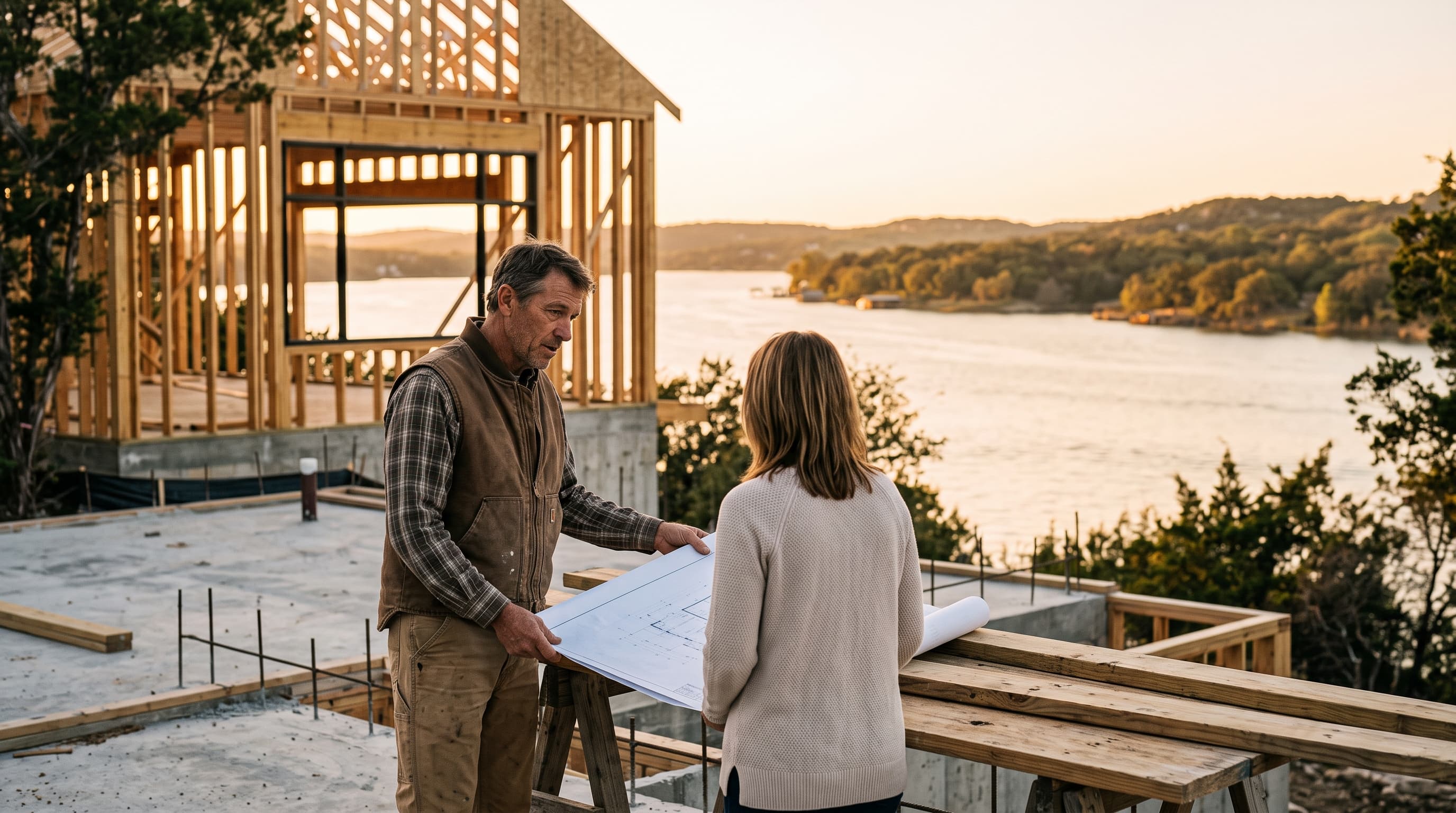
Setbacks are the minimum distance your house must be from the property line. If you place your home too close to the boundary, the county can force you to move it or face heavy fines. We map out the building envelope early in the design phase to ensure we are compliant with all local ordinances.
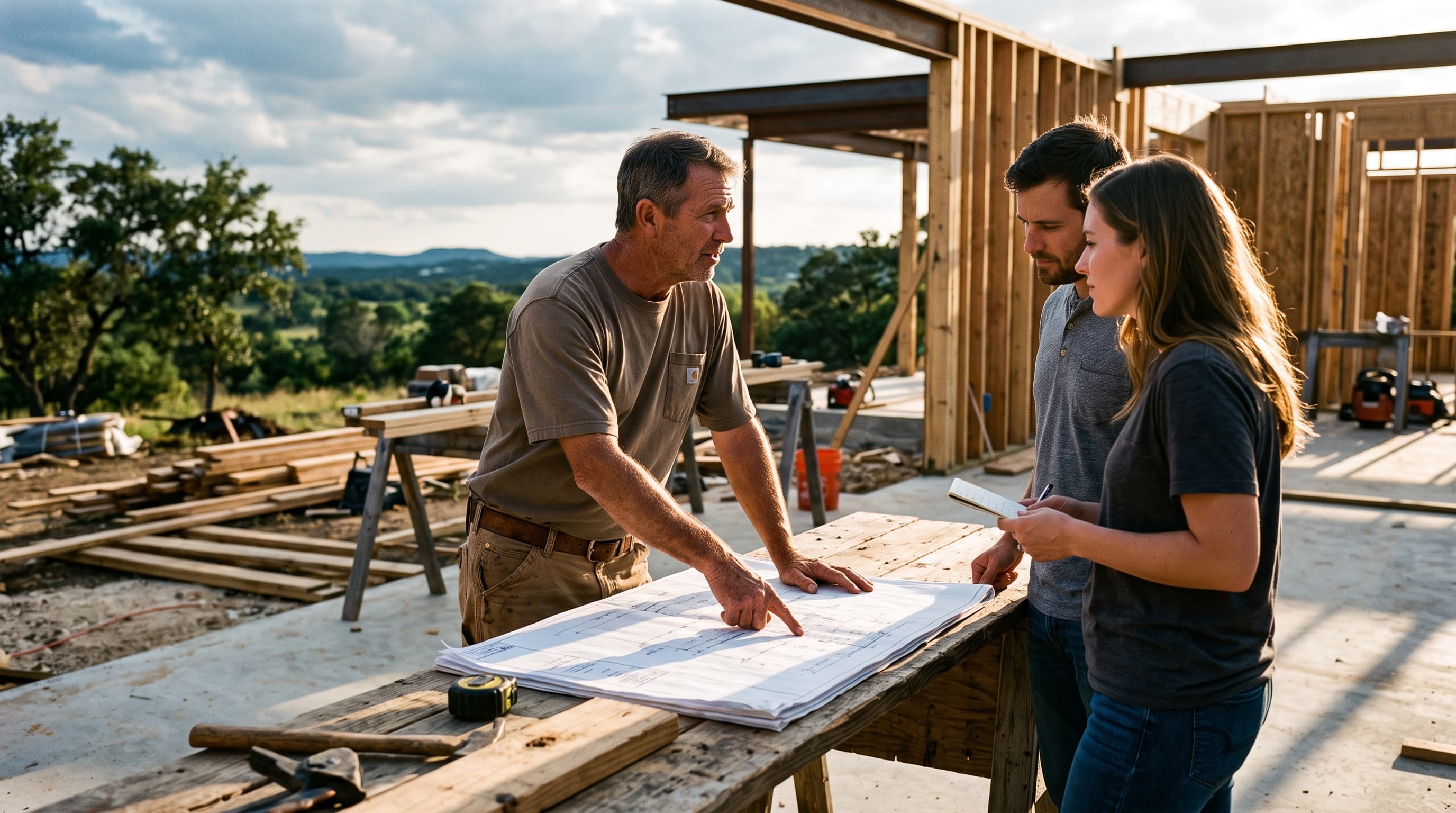
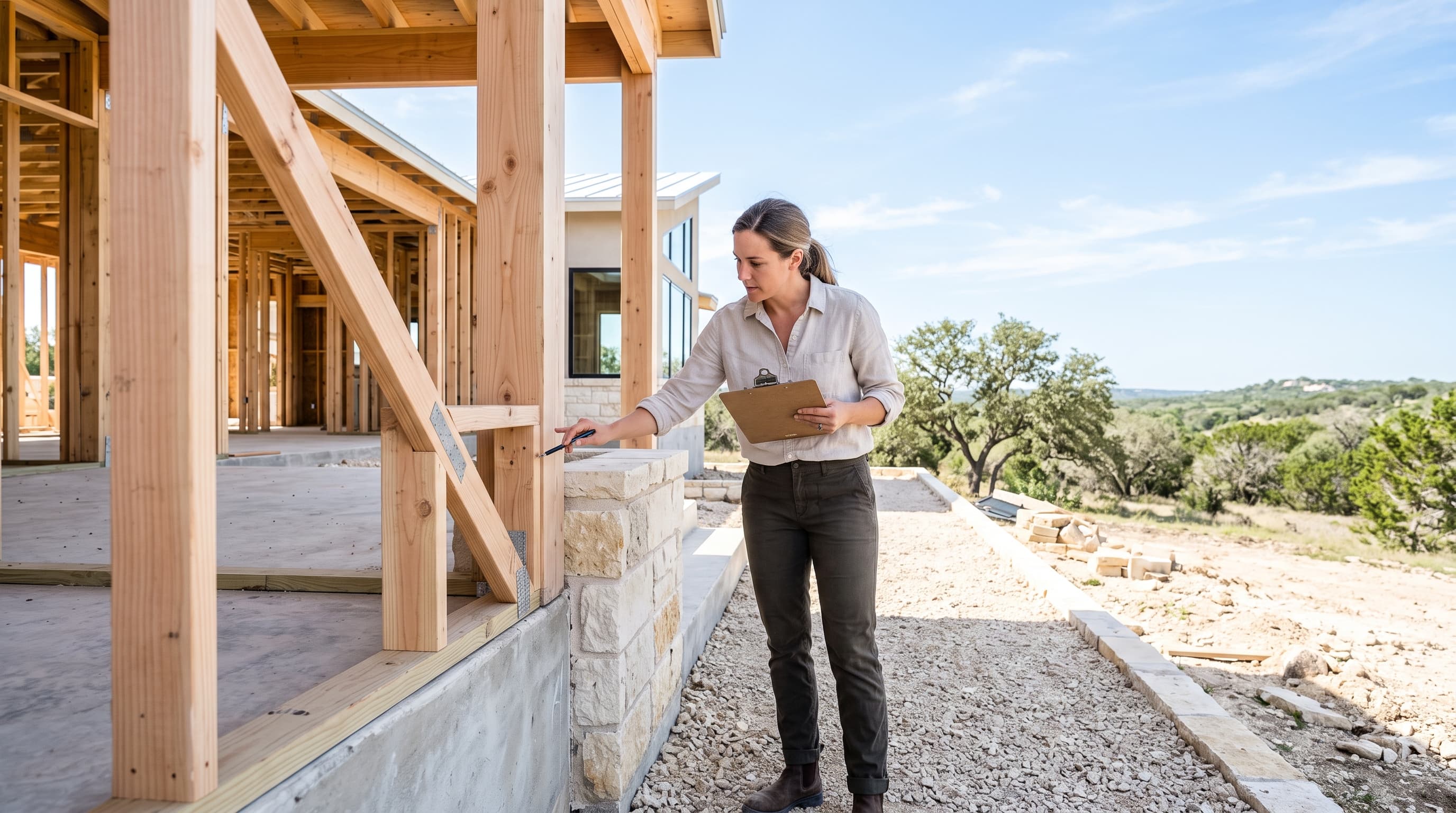
Permitting in Seguin and New Braunfels requires a clear set of engineered plans. I handle the coordination between the architect, the structural engineer, and the county building department. We make sure the driveway approach meets county standards for drainage and stability so you don't have a washout every time there is a heavy spring rain.
Designing for Texas Humidity and Heat
A premium home isn't just about high-end finishes; it is about how the house handles the environment. The humidity in the Hill Country can be oppressive, and if a house is not designed to breathe or stay sealed, you end up with mold issues or astronomical electric bills.
I focus on three specific areas: orientation, insulation, and ventilation.
First, we look at the sun's path. We position the primary living areas and porches to take advantage of natural light without turning the house into an oven. Deep roof overhangs are not just a stylistic choice; they shade the walls and windows from the midday Texas sun, reducing the load on your AC.
Second, we use high-performance insulation. We go beyond the minimum code requirements. Using spray foam or advanced batting in the attic and walls creates a thermal envelope that keeps the cool air inside.
Third, we prioritize ventilation. In our climate, moisture management is everything. We install balanced HVAC systems and ensure the attic is properly vented to prevent heat buildup. A house that is built for the Texas climate stays comfortable and lasts longer because the materials aren't constantly expanding and contracting under extreme temperature swings.
What to do next
If you own land in Seguin or the Hill Country, take these steps before you start drawing floor plans:
- * Order a soil report (geotechnical study) to determine your foundation type.
- * Perform a perc test to see which septic system your land supports.
- * Locate your property pins and verify your setbacks with the county.
- * Identify the best spot for your well based on existing neighbors' water depths.
Building on your own land is the most rewarding way to create a home, provided you do the legwork up front. If you have a piece of land and want to know if your vision is feasible for the soil and terrain you have, I am happy to talk through the details with you. Reach out to TKG Custom Homes, and we can discuss how to build something that lasts on your property.