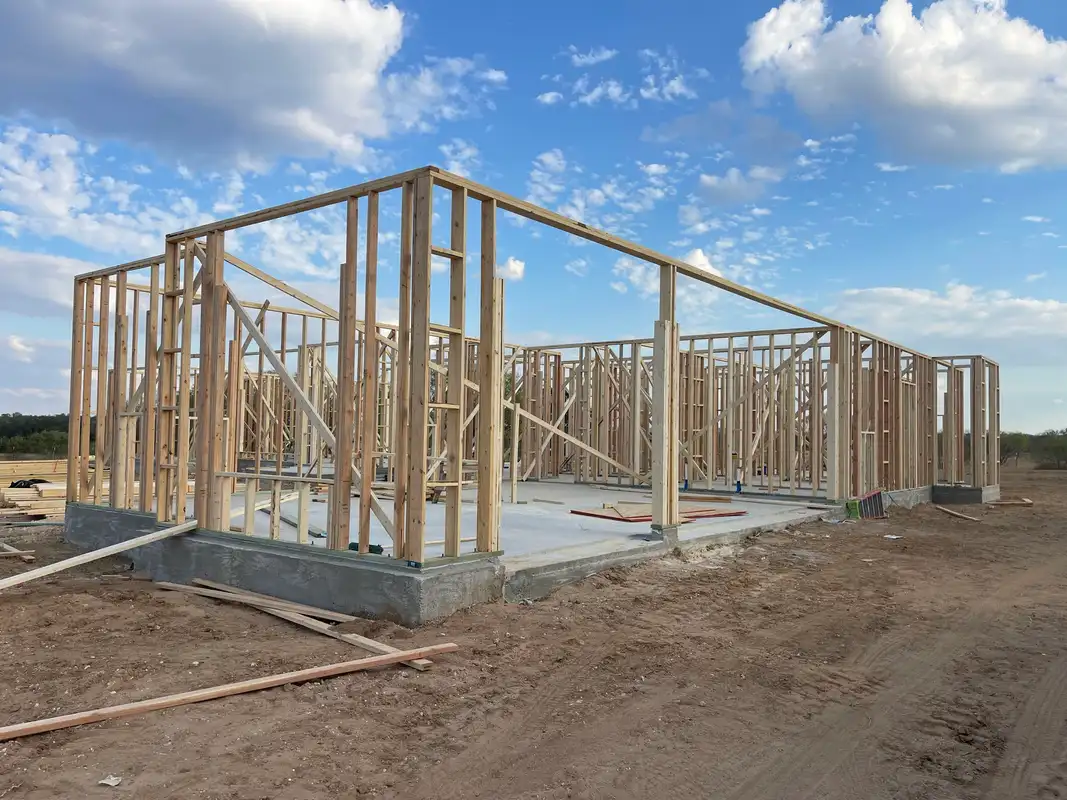
Almost every production builder in Texas uses OSB sheathing + house wrap (Tyvek, Typar, etc.) for their exterior walls. It meets code. It's cheap. It works — until it doesn't.
We use ZIP System sheathing instead. It costs more, and it's worth every dollar.
What Is ZIP System?
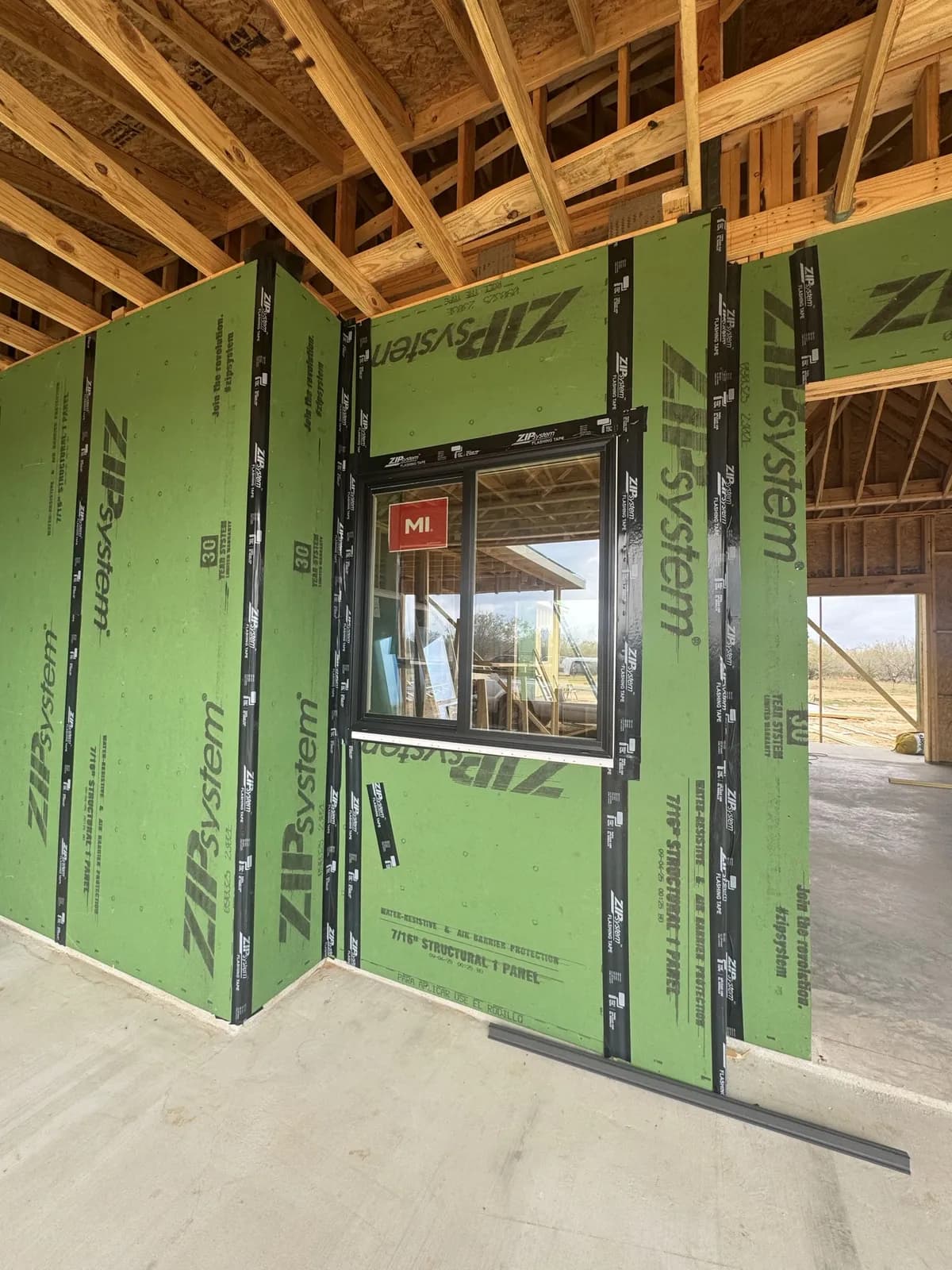
ZIP System is a structural panel (OSB with a built-in water-resistive barrier) that you tape at the seams with ZIP System tape. The green coating on the panel is the weather barrier — there's no separate house wrap layer.
Why It Beats House Wrap
1. Fewer Gaps, Fewer Leaks
House wrap is installed with staples and seams taped from the outside. Wind can get behind it. Rain can find gaps at the staples. ZIP System is bonded directly to the panel — no gap for wind to exploit, no staples to leak around.
2. Better in Hill Country Humidity
Central Texas humidity swings are brutal. House wrap can trap moisture between the wrap and the sheathing if it's installed even slightly wrong. ZIP System breathes outward while keeping liquid water out. In our climate, that's the whole game.
3. It's Structural
ZIP System panels contribute to the wall's racking strength. Standard OSB + house wrap? The OSB does the structural work; the house wrap just sits there. ZIP does both jobs with one material.
4. Faster Dry-In
One product, one install step. The framer nails up the panels, tapes the seams, and the building is weather-tight. No waiting for a separate house wrap crew. For us, that means faster dry-in and fewer weather delays — which is how we hit our 10-12 month timeline.
The Cost Difference
ZIP System adds roughly $1.50–$2.00 per square foot of wall area compared to standard OSB + house wrap. On a 2,800 sq ft home, that's about $3,000–$5,000 more. Compared to the cost of water intrusion repairs? It pays for itself the first time a storm blows in at the right angle.
The Bottom Line
Behind the sheetrock, ZIP System is doing the work that keeps your house dry, tight, and solid. It's not the cheapest option. It's the right one.